
Most homeowners never think about garage door track configuration until they run into a ceiling that's too low, too high, or shaped wrong for a standard door. Track is what your door actually rides on as it opens and closes, and the right configuration depends on how much room you have above the opening, what's happening in your garage ceiling, and sometimes the pitch of your roof. Get the wrong one and the door either won't fit, won't clear what's in the garage, or wastes headroom you could've used.
Here's a rundown of the five track configurations I install as part of our garage door installation services, and how to know which one your garage actually needs.
Standard Track (12" & 15" Radius)
This is what's on the vast majority of residential garage doors, and it's what I install most often. The door curves up and back along a track that transitions to horizontal a set distance from the opening — either a 12-inch or 15-inch radius, referring to how far back that curve extends. Which radius fits depends on your ceiling height and garage depth.
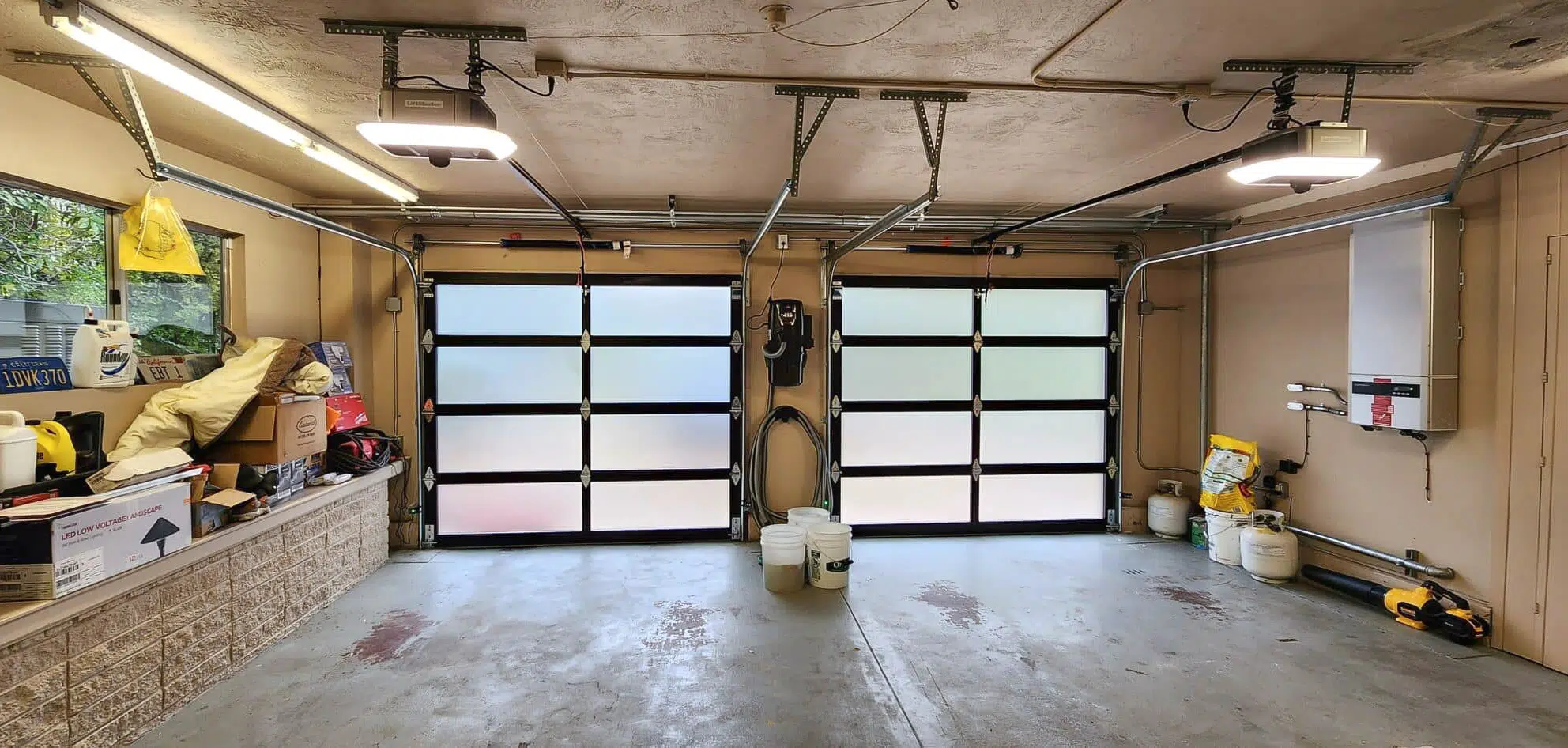
Standard 12" radius track — the setup you'll find on most homes.
Low Headroom Track
If there isn't enough clearance above your door opening — because of a low ceiling, a support beam, ductwork, or storage you don't want to give up — standard track simply won't fit. Low headroom track uses a different spring and track configuration that needs only a few inches of clearance above the opening instead of what standard track requires. I see this most in older homes and detached garages with low rooflines.
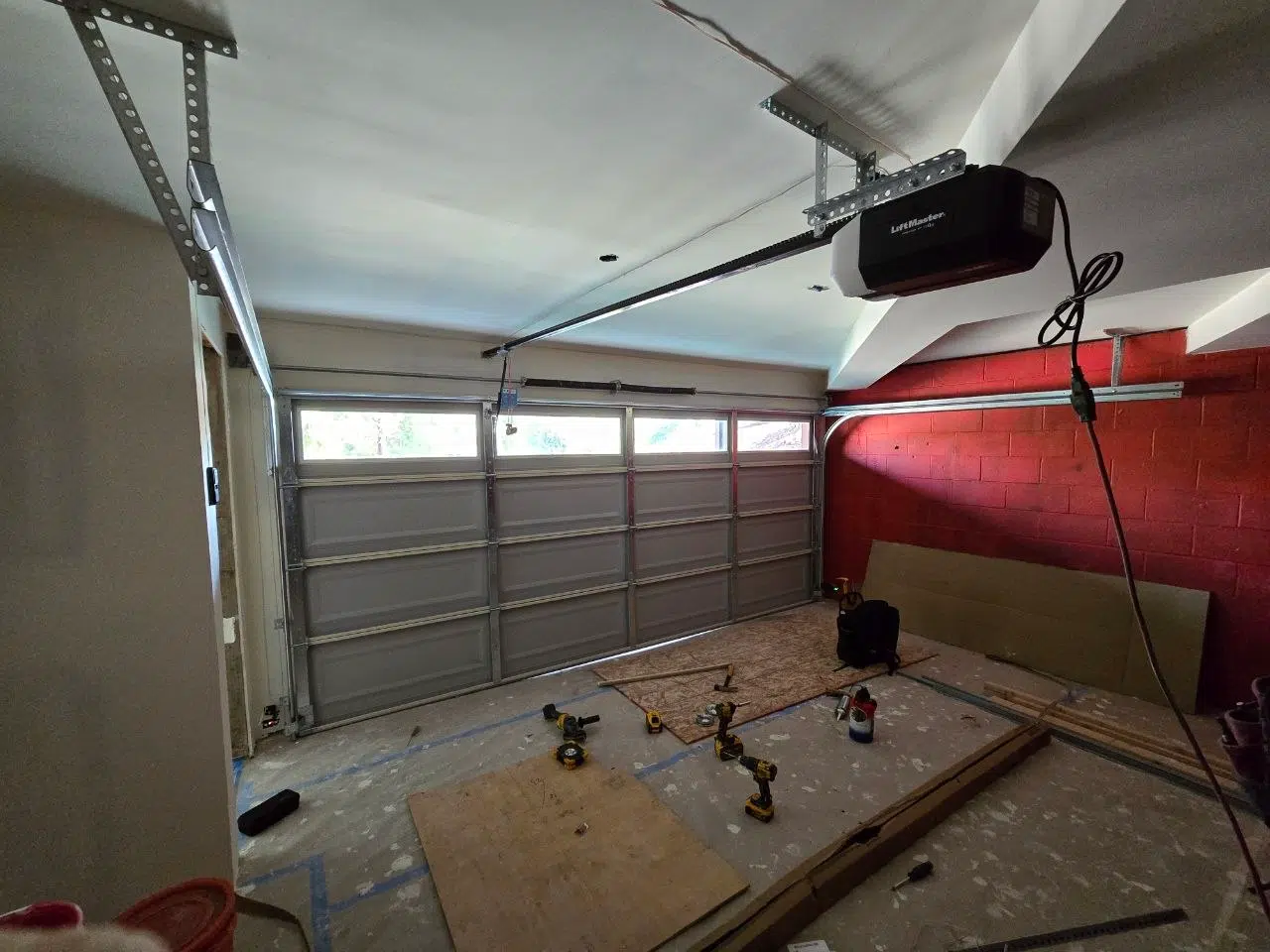
Low headroom track on a recent job — just a few inches of clearance needed above the opening.
High Lift Track
When you need extra clearance underneath the track itself — for a car lift, an oversized vehicle, or gym equipment mounted near the ceiling — high lift track is the answer. Instead of curving back to horizontal right away like standard track, it extends the vertical section higher before curving, which raises the whole horizontal track further up and out of the way. It needs more overall ceiling height to install than standard track does.
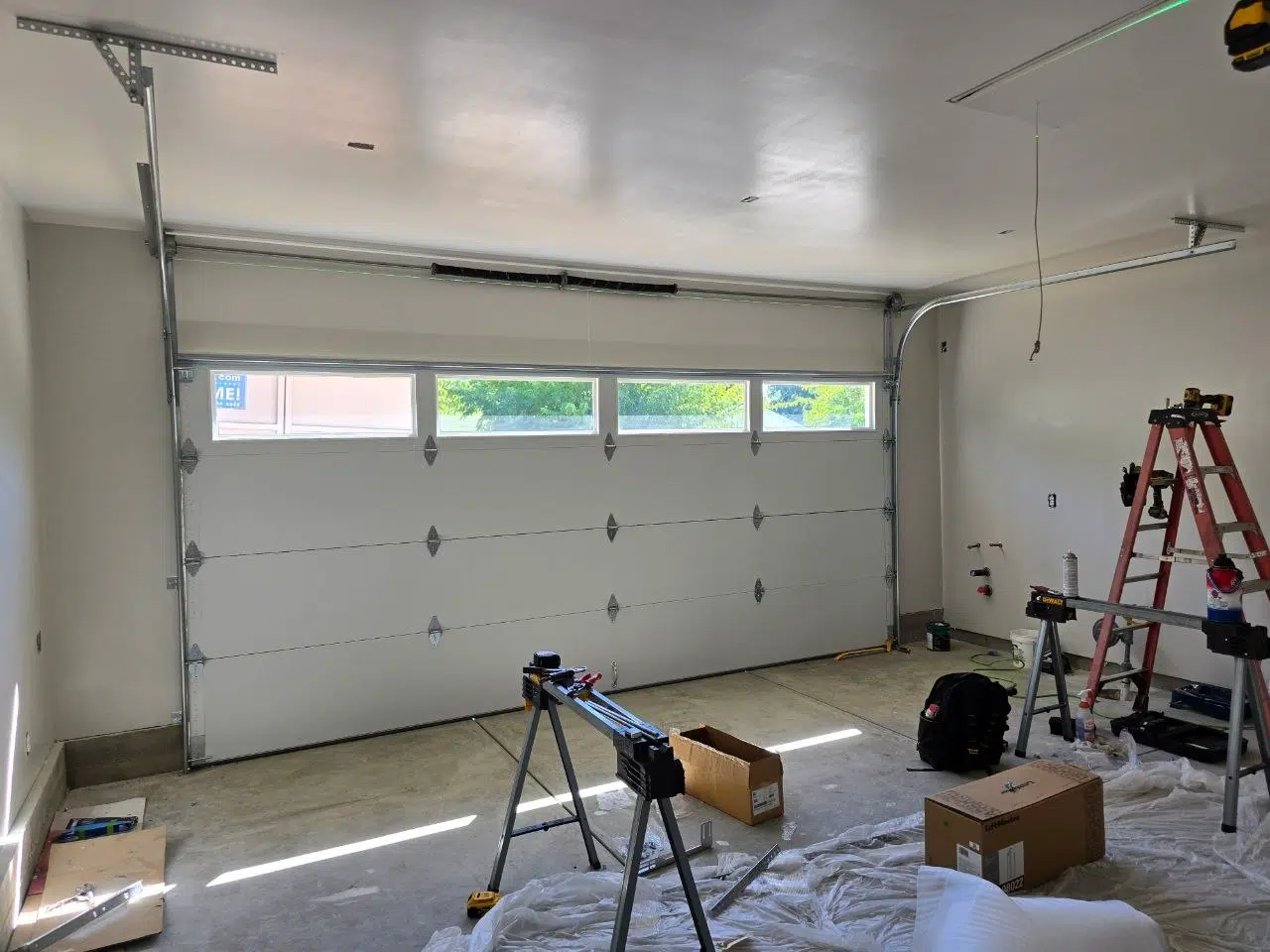
High lift track — raises the horizontal track higher for extra clearance underneath.
Vertical Lift Track
For garages with very tall ceilings where you don't want the door curving into the ceiling at all, vertical lift track sends the door straight up, hugging the wall, with no horizontal section running across the ceiling. It uses the most ceiling height of any configuration, but it frees up the entire ceiling for storage, lighting, or ductwork. I install this most often in taller detached garages, workshops, and commercial-style setups.
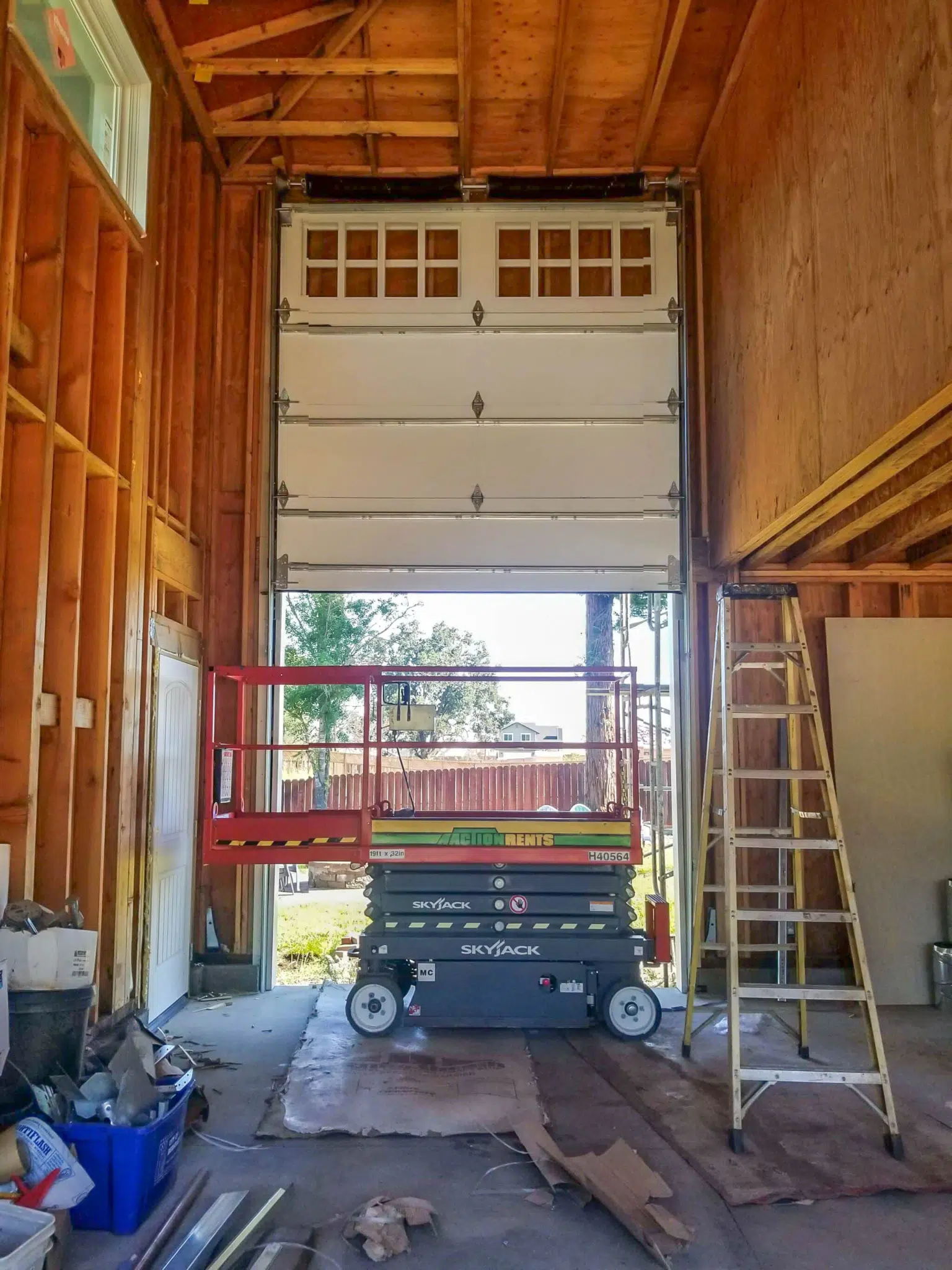
Vertical lift track — the door travels straight up along the wall instead of curving into the ceiling.
Pitch (Angle) Track
Built to follow the slope of a pitched or vaulted garage ceiling instead of running level. Without it, a standard level track under a sloped ceiling either wastes the extra height the pitch gives you, or worse, doesn't have enough clearance where the ceiling is lower toward the front of the opening. Pitch track is custom-fit to your specific roofline.
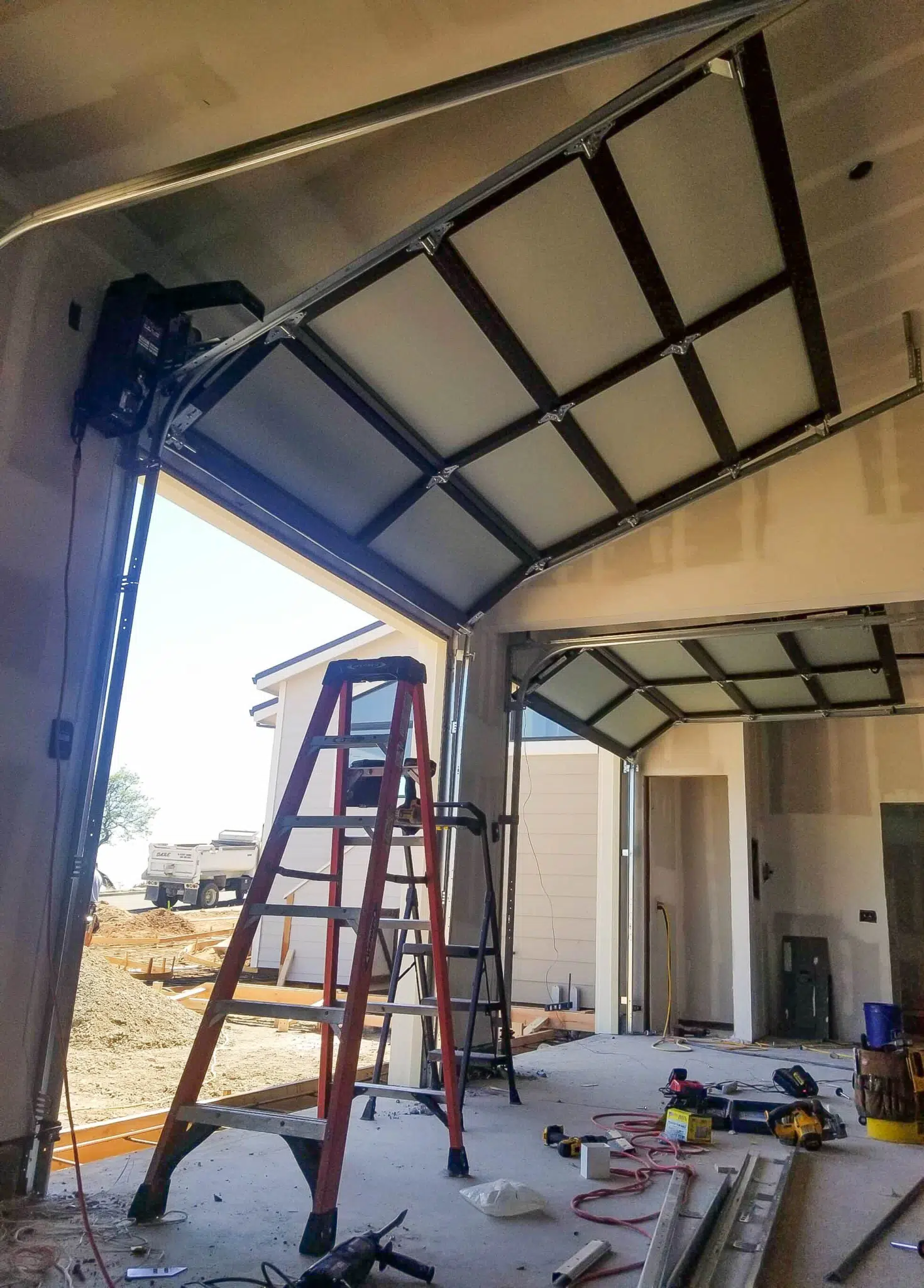
Pitch track following the roofline instead of running level.
Quick reference: standard track fits typical residential garages with normal ceiling height. Low headroom is for low ceilings, beams, or ductwork. High lift is for car lifts, tall vehicles, or ceiling-mounted equipment. Vertical lift is for very high ceilings where you want the ceiling fully open. Pitch track is for vaulted or sloped garage ceilings. These are general guidelines — exact clearance requirements vary by door weight, spring system, and manufacturer, so I measure every garage on site before recommending a configuration.
Not sure which one your garage needs? Call me directly at (925) 316-8384 and we'll figure it out, or get a starting price with the Build & Price tool.
Track Type FAQ
How do I know which garage door track I need?
It comes down to how much headroom and ceiling height you have above the door opening, and whether anything in the garage needs extra clearance, like a car lift, storage, or workout equipment. In most cases I can tell which track configuration you need just from measuring the opening and ceiling height on site.
Can I switch track types on an existing garage door?
Often, yes, but it usually means replacing the track, springs, and sometimes the opener mounting setup together, since they're all sized to work with a specific track configuration. It's rarely just a track swap on its own.
Does track type affect the cost of installation?
Yes. Standard 12-inch or 15-inch radius track is the most common and typically the most affordable. Low headroom, high lift, vertical lift, and pitched track all require different hardware and more labor to set up correctly, so they cost more than a standard installation.
What is garage door headroom and why does it matter?
Headroom is the vertical space between the top of your door opening and the ceiling. Your track and spring system needs a minimum amount of headroom to operate, and if you don't have enough, a standard track won't fit — that's when low headroom or another track configuration comes into play.
— Dustin Cantu, owner of Generational Garage Doors, CA Contractor's License #1113495