

The Honest Garage Door Company
Why Is My Garage Door So Loud?
Every noise your door makes means something specific. Here's what each one actually is, and which ones you shouldn't wait on.
A garage door is the largest moving thing on your house. It's never going to be silent. But there's a difference between the sound of a door working and the sound of a door telling you something is wrong — and most homeowners can't tell which one they're hearing.
We get called out for noise more than almost anything else. Sometimes it's a ten-minute fix. Sometimes the noise is the only warning you get before a part fails and the door stops working entirely, usually with your car behind it.
Here's how we sort it out. Find your noise below.
Grinding or Metal-on-Metal
This is the one everybody gets wrong. Homeowners hear grinding and assume it's the rollers. Most of the time it isn't.
A hard metal-on-metal grind usually means your torsion components are failing — specifically the bearings in the end bearing plates at each side of the shaft. When those bearings go, the shaft is running dry against metal. You'll often hear it worst at the very start of the door's travel.
Don't wait on this one. A failing bearing plate puts load somewhere it wasn't designed to go, and what fails next is usually more expensive than the bearing.
Squealing or Screeching
That high, dry screech is almost always hinges. Every section of your door pivots on hinges, and there are a lot of them. When they dry out, they announce it.
This is the most fixable noise on the list. Proper lubrication on the hinges will usually quiet it right down. If it comes back within a few weeks, the hinge itself is worn and needs replacing, not lubricating.

Popping or Banging on the Way Up
Sharp pops or bangs as the door travels usually come down to one of two things: a damaged section, or rollers.
A section that's been hit, bent, or is starting to separate will flex as the door moves through the curve of the track, and that flex pops. Worn rollers do something similar — they bind, release, and bang instead of rolling smoothly.
Either one gets worse. A section that's separating isn't going to un-separate, and a roller that's binding is putting that stress into the track and the hinges holding it.
One Loud Bang, Then Nothing
If you heard a single sharp bang — often described as a gunshot — and now the door won't open, that's almost certainly a broken torsion spring. The spring stores all the energy that lifts the door. When it lets go, it lets go loud.
The other possibility is the motor jumping teeth on the gear. Less common, but it makes a similar sound and leaves you just as stuck.
Do not try to lift the door manually with a broken spring. Without the spring doing its job, you're lifting the full dead weight of the door, and it can come down hard.
Rattling That Shakes the Whole House
If the noise carries into the bedroom above the garage, that's the operator. Old chain drive units transmit vibration straight into the framing, and they get louder as they age and the rail hardware loosens.
Tightening the rail and mounting hardware helps. But if the unit is fifteen years old and shaking the house, the honest answer is that you're maintaining something at the end of its life. A modern belt drive is a completely different experience — if there's living space over or beside the garage, it's worth it. We cover the difference on our openers page.

Clicking
A repeating click as the door moves is usually a broken hinge, or a roller jumping in the track. Both are small parts doing something they shouldn't, and both can put a door off track if they're ignored long enough.
Straining or Humming but Barely Moving
If the motor is working hard and the door is crawling, the problem usually isn't the motor. It's balance.
Your springs are supposed to carry the weight of the door — the opener only guides it. When the springs lose tension, the opener starts lifting weight it was never designed to lift. It will keep doing that until it burns out. What started as a spring adjustment turns into a spring and a new opener.
Quick test: pull the emergency release cord and lift the door by hand to about waist height. A balanced door stays roughly where you put it. If it slams down or shoots up, the springs are the problem, not the motor.
What You Can Do Yourself
Lubricate the moving parts. Hinges, rollers, and the torsion shaft bearings. Use a garage-door-specific lubricant or white lithium grease. Never use WD-40 — it's a solvent, and it strips the lubricant that's already in there.
Tighten what's loose. Hinges, track brackets, and the opener rail hardware all work loose over years of cycling. A socket wrench and ten minutes takes care of a surprising amount of rattle.
Do not touch the springs. Torsion springs hold hundreds of pounds of stored energy. Adjusting or replacing one without the right bars and the right technique is how people get seriously hurt. That's the line between homeowner maintenance and our job.
When It's Time to Call
Call the same day if you heard a single bang and the door won't open, if you hear hard metal-on-metal grinding, or if the opener is straining against a door that won't move freely by hand. Those three are the ones that turn into bigger repairs while you wait.
Everything else on this list can wait a few days, but not a few months. Noise is a door telling you a part is wearing out. It doesn't get quieter on its own.
We're owner-operated out of Martinez and we service all of Contra Costa and Solano County. Call us and describe the sound — we can usually narrow it down on the phone before anybody leaves a driveway. If it's easier to show us, record a short video from inside the garage with the door in motion so we can hear it running, and send that over.
Our repair pricing is published on our price list, and if your door is just overdue for service, that's our annual maintenance and inspection.
Common Questions
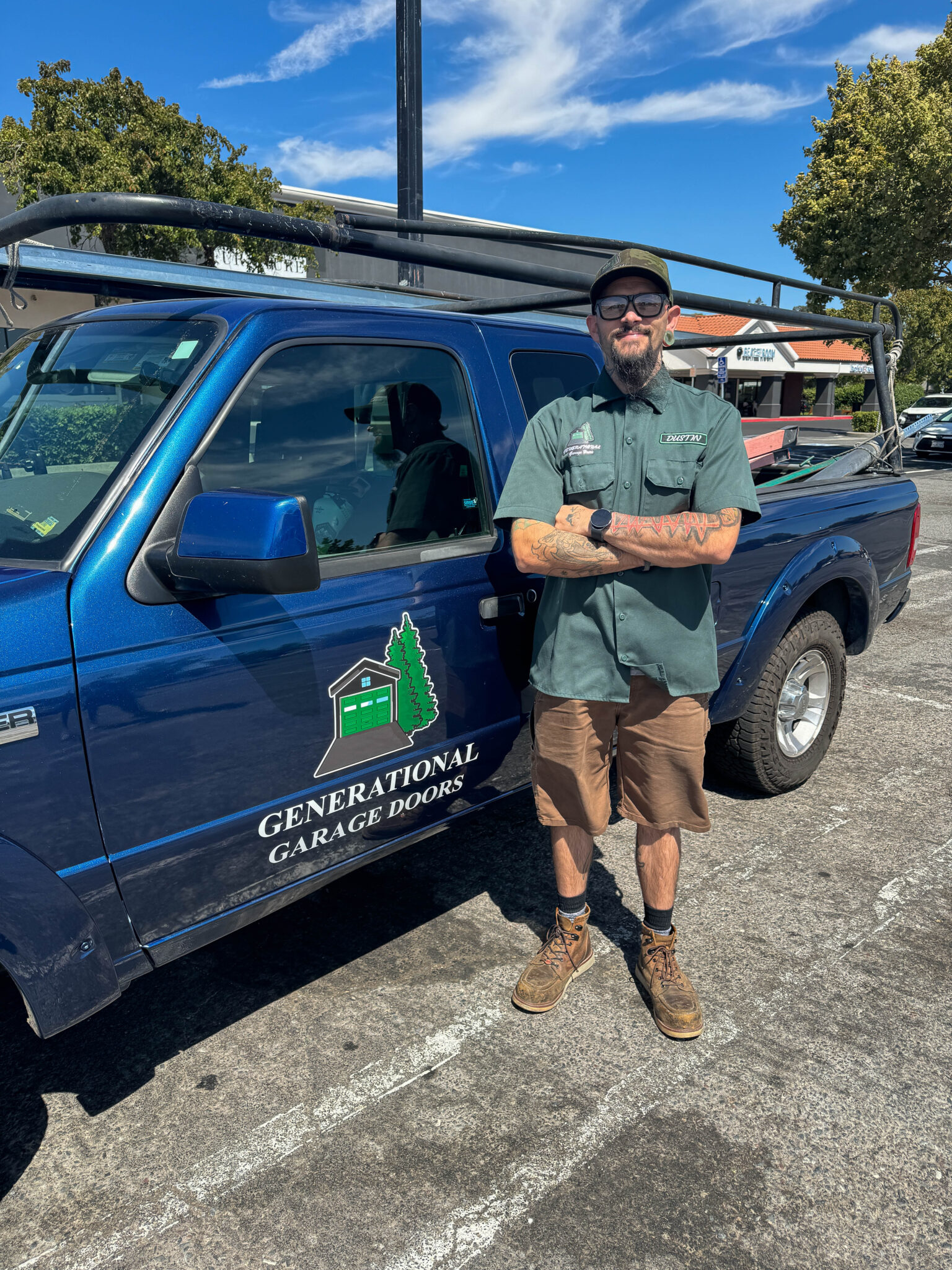
Hearing Something You Don't Like?
Call and describe the noise. We can usually narrow it down on the phone, and we stock the common parts on the truck so most repairs are one visit. Serving Contra Costa and Solano Counties.
Call or Text (925) 316-8384 Send a Message